Columbia House shuts down after 71 years: the end of a legendary record club
By Tourspider
August 18, 2026
Columbia House, the famous American mail order club that once offered 12 CDs for one cent, is closing its doors for good on September 15, 2026.
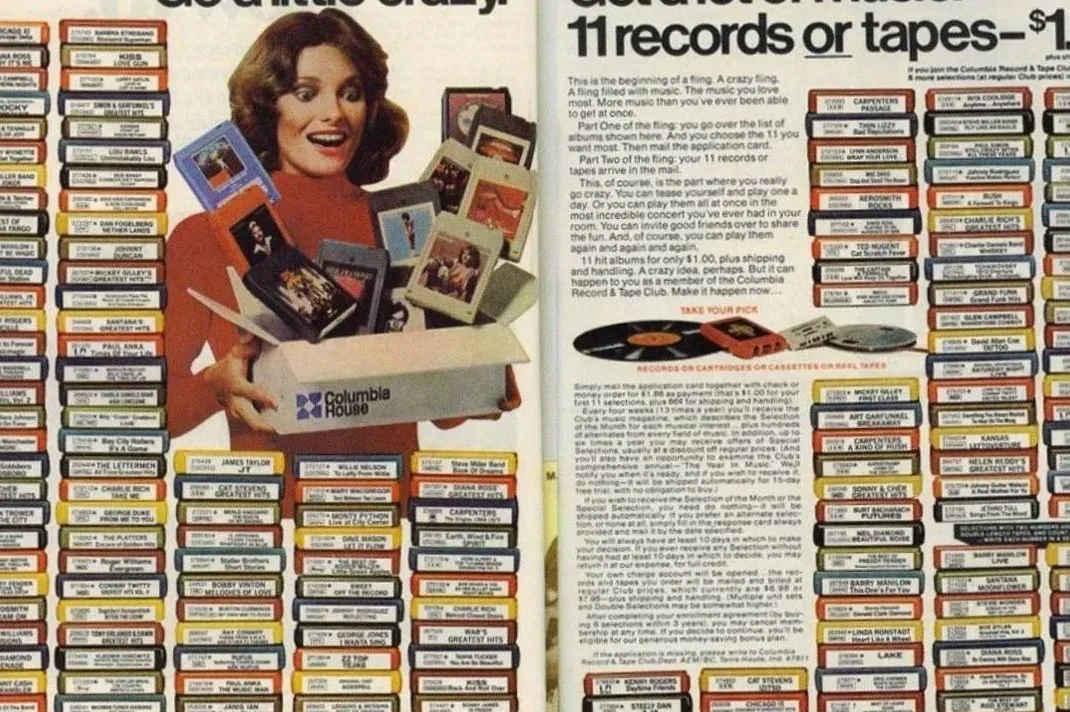
After 71 years, Columbia House is calling it quits. The legendary American mail order club announced on its website that it will stop accepting new orders as of September 15, 2026. The notice on the site reads: "After 9/15/26, The Columbia House will no longer be accepting new orders. You can still purchase books with your credit card or credits as normal." The news was first picked up by the YouTube channel Channel 33 RPM and later spread by the website Cord Cutters News.
If you had no idea Columbia House even still existed in 2026, that is completely understandable. The club had long since stopped being a music service and had spent the past few years selling DVDs and Blu rays under its familiar name. Even so, the closure marks the definitive end of a company with a remarkable history. Columbia House started in 1955 as the Columbia Record Club, an initiative by CBS and Columbia Records to deliver records straight to people's homes. New members received a free LP when they signed up and no longer had to make a trip to the record store. The concept was a huge hit: by 1963, the club already accounted for ten percent of the total music retail market in the United States.
In the early seventies the name changed to Columbia House. To set itself apart from competitors, the company struck licensing deals with other record labels, giving members a much wider selection to choose from. The most famous selling point became the so called introductory offer: up to 12 albums or cassettes for just one cent, later adjusted to 13 for a dollar, in exchange for a commitment to buy more albums at full price down the line. This led to a peak of 16 million members in 1996, the same year the Columbia House website launched.
The downside of the model was so called negative option billing: if you did not actively cancel, you kept receiving and paying for a new album every month. Columbia House faced serious criticism for these murky practices. Meanwhile, its ownership structure kept shifting. In 1991, Sony sold half of Columbia House to Time Warner, which merged the service with its own Time Life clubs. A merger with online retailer CDNow in 1999 quickly fell apart. Sony and AOL Time Warner then sold an 85 percent stake to investment firm The Blackstone Group in the early 2000s. In 2005, Columbia House was acquired by competitor BMG, and in 2008 it was sold again to JMCK Corp., after which the company restructured itself as Direct Brands. Music sales were discontinued and only the DVD and Blu ray division kept going under the Columbia House name. The Canadian branch went bankrupt in 2010 and the American branch followed in 2015. Plans to revive Columbia House as a vinyl subscription service never got off the ground.
For music lovers of a certain generation, the name Columbia House brings back strong memories, including in the Netherlands, where similar mail order clubs were a familiar fixture throughout the eighties and nineties. The disappearance of Columbia House symbolically marks the final end of an era in which physical music distribution through mail order was a genuine force in the market. If you want to learn more about the rise and fall of the company, check out the documentary The Target Shoots First by Chris Wilcha, who chronicled his own experiences as an employee at Columbia House.