Dr. Dre embraces AI in music production and compares it to the drum machine
By Tourspider
August 24, 2026
Dr. Dre doesn't see artificial intelligence as a threat but as a creative tool, and he compares resistance to it with the skepticism people once had about the drum machine.
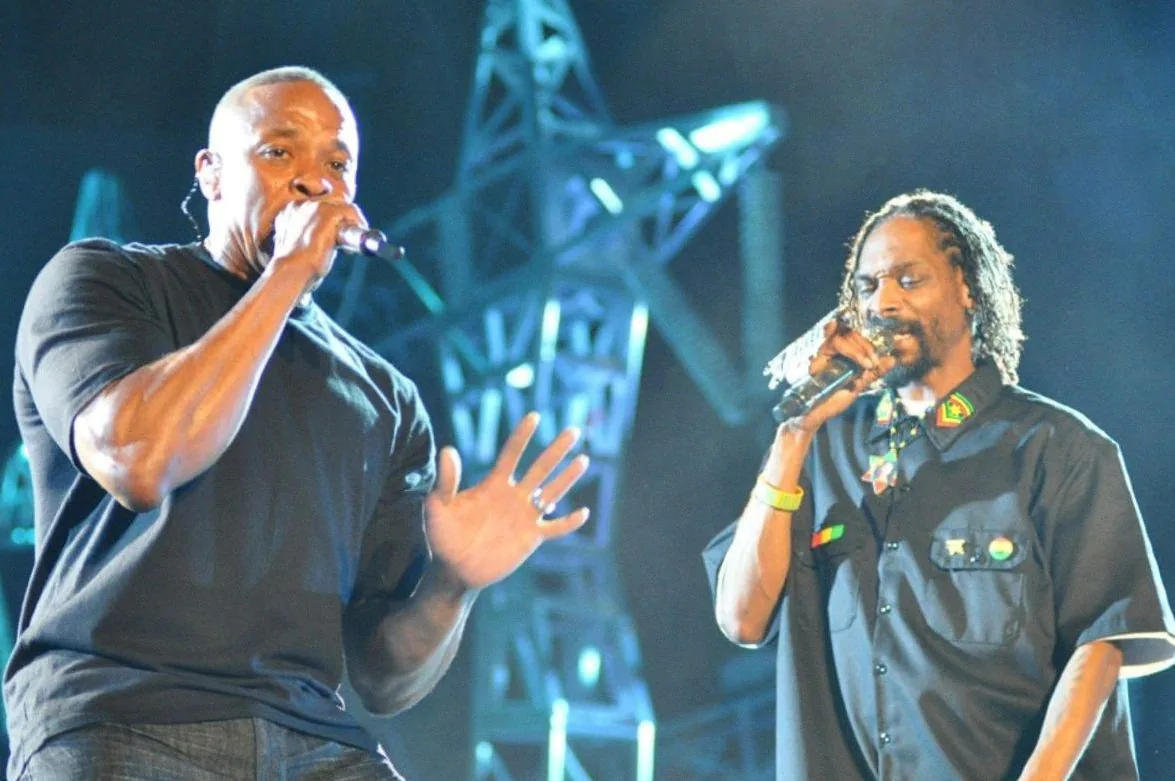
Dr. Dre, the 61 year old rapper, producer and founder of record label Aftermath, has publicly stated that he actively uses artificial intelligence in his music making process. In an interview with The New York Times, published on Sunday August 23, the former N.W.A. member spoke at length about his views on AI and its role in the music industry, alongside his longtime business partner Jimmy Iovine, co founder of Interscope Records.
Dre draws a parallel between today's resistance to AI and the skepticism that once surrounded technological innovations like the drum machine and the synthesizer, instruments that are now completely embedded in pop music. "They were against AI and I'm like, 'OK, you sound like the person that would have been against the drum machine when it came out.' Or synthesizers, right? It's a new tool for creativity. Some people are afraid of learning new things," he told the paper. He added that he uses AI "as a tool to see what it would do with what I just did" and that he is fully on board: "I'm embracing it. I can't wait to see what's going to happen with this."
On musicians who see AI as a threat, Dre was brief and blunt: "I think the only people that see it as a threat are the people who have trouble creating." Iovine agreed, suggesting there are "a lot of closet AI producers out there," to which Dre responded: "That's a good way to put it. They're using it, they just don't want to admit it." Iovine himself was openly enthusiastic: "I'm very pro AI in music creation. I don't see the downside at all. There will be some crappy music. There's crappy music now. In the studio, when gifted people have AI, they're going to make better records."
Dre and Iovine have a long history as business partners. They co founded Beats Electronics and Beats Music, the brand acquired by Apple in 2014 for a reported three billion dollars and change. Dre also serves as CEO of Beats, which now operates under the Apple umbrella.
Dre's comments don't exist in a vacuum. They land right in the middle of a broader debate currently gripping the music industry, one that touches on copyright, artistic authenticity and the rights of musicians in the age of generative AI. Not everyone shares his enthusiasm. Thomas Bangalter of Daft Punk recently came out critical of AI as a musical tool, calling it a shortcut that holds back the creative process rather than enriching it. Bands like King Gizzard and the Lizard Wizard are also dealing with AI clones of their music competing for streaming rights and causing real financial damage.
At an industry level, concrete steps are already being taken. Apple Music announced that listeners will soon be able to see when music was made with AI through a visible label reading "Made With AI." On top of that, the IFPI and the RIAA launched a voluntary labeling program in July that distinguishes between music fully generated by AI and recordings where AI was used only as a supporting tool. For Dutch music fans and industry professionals, the debate hits close to home too. Here as well, artists, labels and streaming services are wrestling with the question of where the line sits between technological progress and creative integrity.